
Simple-FX needed reliable data attribution across its lead capture and checkout funnels, but browser tracking restrictions and ad blockers were cutting into event visibility. We engineered a full server-side tracking stack — a Google Tag Manager server container hosted on Stape.io — and moved conversion tracking for Meta, GA4 and Google Ads onto it.
Scope and outcomes from the server-side tracking build. Client campaign performance figures are not published here.
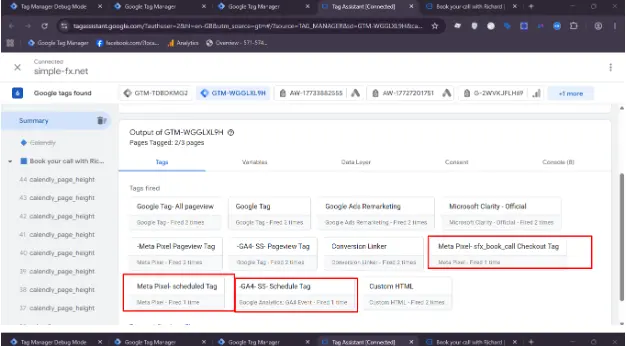

Standard client-side tracking had three weak points. Browser privacy controls (Safari ITP, Firefox ETP) and ad blockers prevented full event visibility. Concurrent browser and server signals risked double-counting transactions if deduplication was not configured properly. And short cookie lifespans on client-side scripts reduced long-term attribution accuracy for paid campaigns.
A server-side tracking architecture designed to capture and relay conversion signals to ad networks and analytics platforms.
A dedicated server-side container hosted on Stape.io acts as a secure proxy between the user’s browser and third-party advertising APIs. First-party cookie configuration routes pixel requests through a custom domain, extending tracking cookie lifespans and defeating browser-based cookie decay.
Dual-tagging (browser + server) for maximum event coverage on sfx_initiate_checkout and sfx_purchase. Exact event ID matching across browser and server payloads eliminates duplicate reporting in Meta Events Manager, with transaction_id, currency and value passed on every event.
Custom funnel events integrated into GA4 with full transactional and item-level data arrays (items, item_id, item_name, item_category, quantity) for granular e-commerce reporting. Dedicated server and browser tags registered sfx_purchase as the Google Ads conversion action, passing dynamic parameters so ROAS and Target CPA bidding can optimise effectively.
Server-side execution captured conversions that were previously lost to ad blockers and browser restrictions. Passing enriched user and item parameters lifted Meta Event Match Quality scores, and unified tracking across Meta, GA4 and Google Ads gave the account a single source of truth for marketing performance instead of three platforms disagreeing with each other.
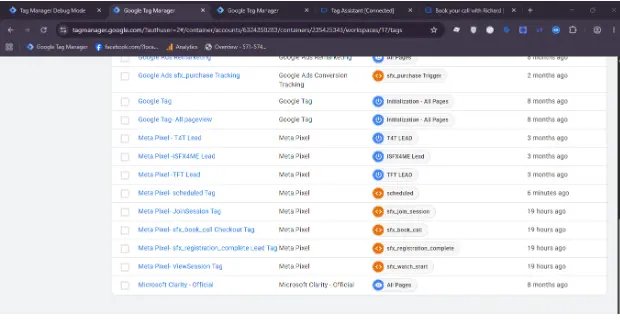
Before this build, browser privacy controls and ad blockers were removing events before they reached Meta, GA4 or Google Ads, and concurrent signals risked counting the same transaction twice. We deployed a server-side container on Stape.io, dual-tagged the core checkout events with exact event ID deduplication, extended cookie lifespans through a first-party domain, and verified the whole flow with live test transactions in Meta Test Events, GA4 DebugView and Google Tag Assistant.
Note: this engagement covered server-side tracking architecture, event mapping and QA verification. Campaign spend and performance figures are not published here.
We’ll audit your pixel, your conversion API setup and your cookie configuration, then show you which events are never reaching the platforms you pay.